My artistic process and the need for a “shit” pile.
Early on in my teaching career as a high school drama teacher I specifically remember listening to an interview with the lead singer of the Nine Inch Nails, Michael Trent Reznor, on Triple J ABC Radio on my way to work. Reznor was talking about his artistic process and what he said has stayed with me ever since. I now feel like I deeply understand what he was articulating.
He recalls that he writes everyday, without fail. At the end of the session he has two piles on his desk: the good pile and the “Shit” pile. He puts the things that he liked and showed promise in the good pile and the things he hated in the “Shit” pile. But here’s the thing that stuck with me; he never ever throws away the shit. Instead he revisits the work months, sometimes years later, and he sees it through a different lens and often he likes the writing and it ends up in his songs.
Why is all of this important?
Because it reframes “perceived” failure.
What Reznor describes isn’t about separating good work from bad work — it’s about refusing to decide too quickly what has value. The “shit pile” isn’t a bin; it’s a holding space. A pause. An acknowledgement that creative work doesn’t always reveal its usefulness on the day it’s made.
As artists, we are often too close to our own work. We judge it through the lens of expectation, mood, exhaustion, or comparison. What feels flat or unresolved today may simply be unfinished — not a failure. Time adds context. Distance adds generosity.
This idea fundamentally changed the way I create in the studio or on the workshop floor with my students.
In the classroom, students often want to know immediately if something is good. They want reassurance and certainty. But creativity doesn’t work on a linear timeline. Some ideas need to sit quietly before they speak. When we discard work too quickly, we train ourselves to only value what is instantly successful — and that narrows the field of what we’re willing to try.
In my own artistic practice now, I see the “shit pile” as essential. It’s evidence of showing up. Of taking risks. Of moving through discomfort rather than around it. The pile grows because I am working not because I am failing (and believe me, my pile is getting very big).
And here’s the quiet truth: many of the works I now feel most connected to began as things I didn’t understand, didn’t like, or didn’t trust yet. They needed time for me to catch up to them.
This is why process matters more than outcome. Why play matters more than polish. Why nothing is ever wasted if you’re paying attention.
The work you’re unsure about today may be the work that teaches you the most or becomes something entirely different tomorrow.
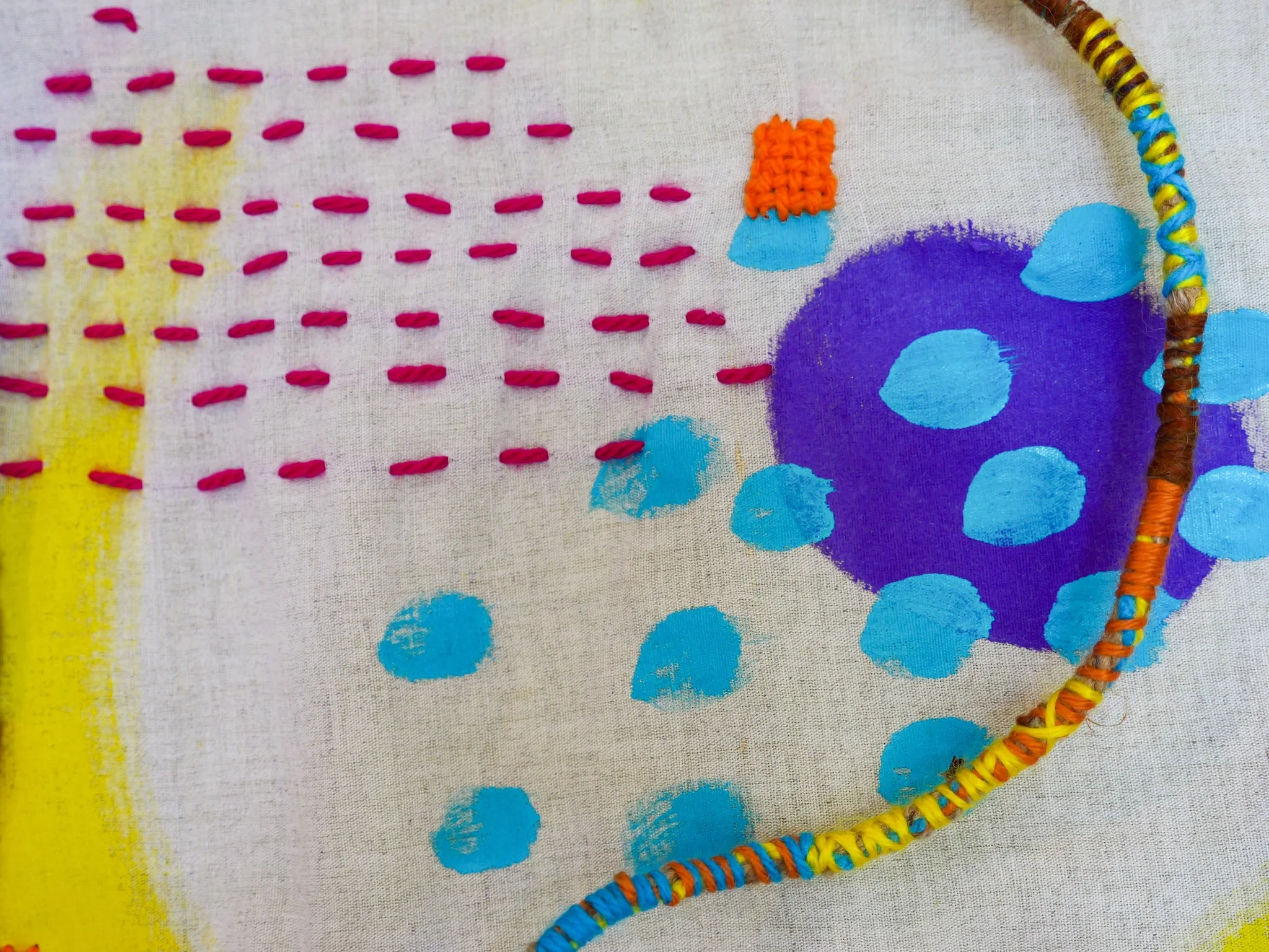
Detail of hand painted linen fabric with embroidery sections.
STORY
About two years ago I had a fantastic idea (aren’t they all fantastic in your head) to purchase some beautiful organic linen and hand paint it to turn into an item of clothing. So I set myself up outside in the dappled sunlight and got to work.
Well that day was a major disappointment and needless to say the fabric was quite heftly thrown into the “shit” pile … and stayed there for more than two years, until the other day when I pulled it out and reconsidered it.
I felt like it had promise and so picked it up again.
I started with some embroidery; running stitches, followed by some woven and french knot stitches and as the work progressed I realised that this piece hadn’t been given it’s full consideration. It was merely the base layer that was crying out for texture.
This then led to some bead application; gold beads being sewn into the yellow french knots. With more beads to be applied at as the days progress. And only now can I start to see the light at the end of the tunnel. By the way, I don’t actually know what it will look like and what it will evolve into, but I feel confident in the process of playing with the piece to work that out.
And I think there in lies my process: I play until the piece finds me.
I wish I could pull out my artists journal and show you the thought process behind my pieces but I simply can’t do that - I don’t work that way.
I work through making things in response to colour, shapes, texture and feelings. When I walk throughout the day I’m constantly making a mental note of how a colour appeared, the shape it held in contrast to another, how it felt to touch it and how it made me feel. When I paint or make something, these reference points often come back to me.
I now am able to bring in other pieces from my piles of stuff and see if they work with this piece: the 20 meters or more of woven rope, the hand stitched embroidery piece that actually started as a practice piece and so many more.
The options are endless.
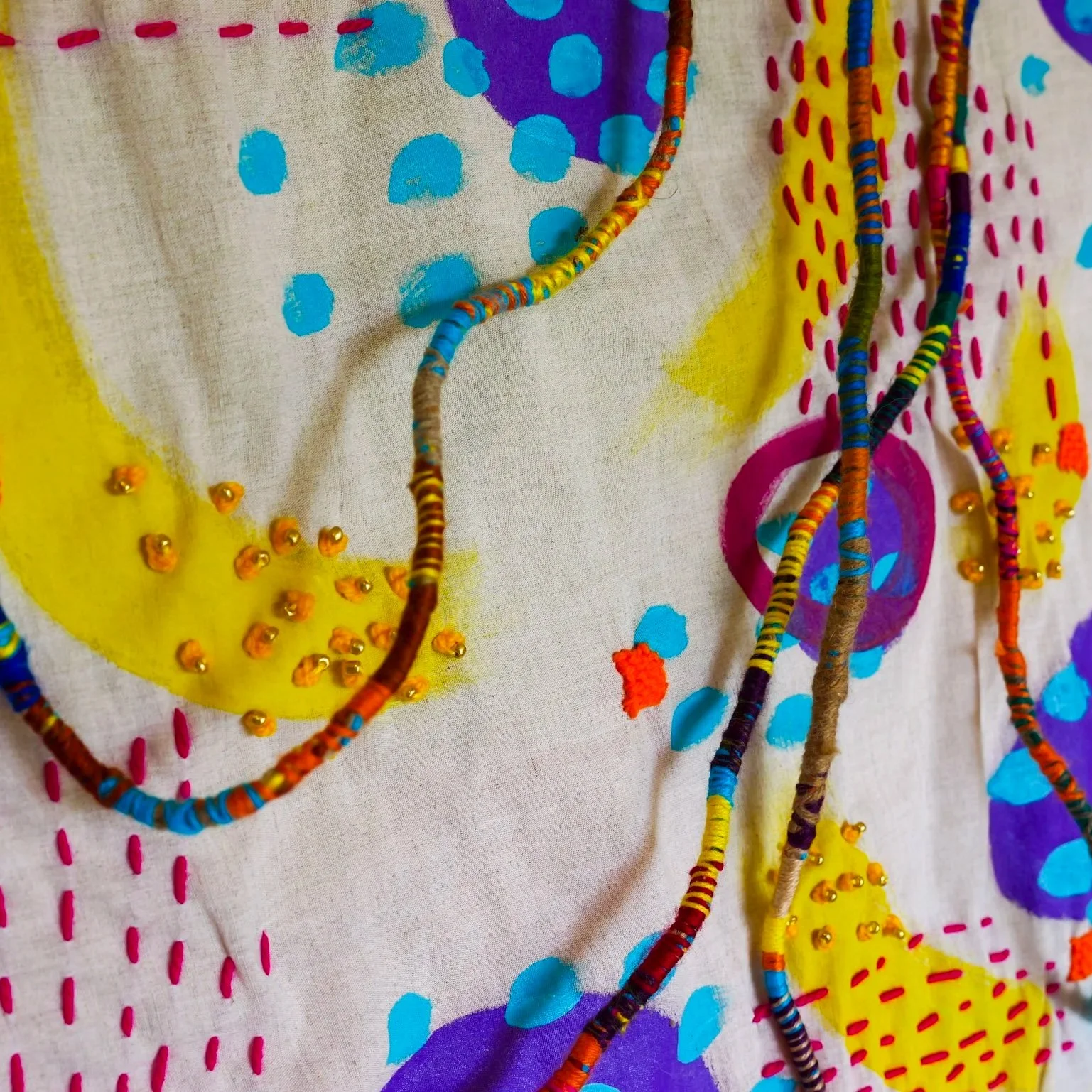
Detail of bead work application and woven rope being investigated.
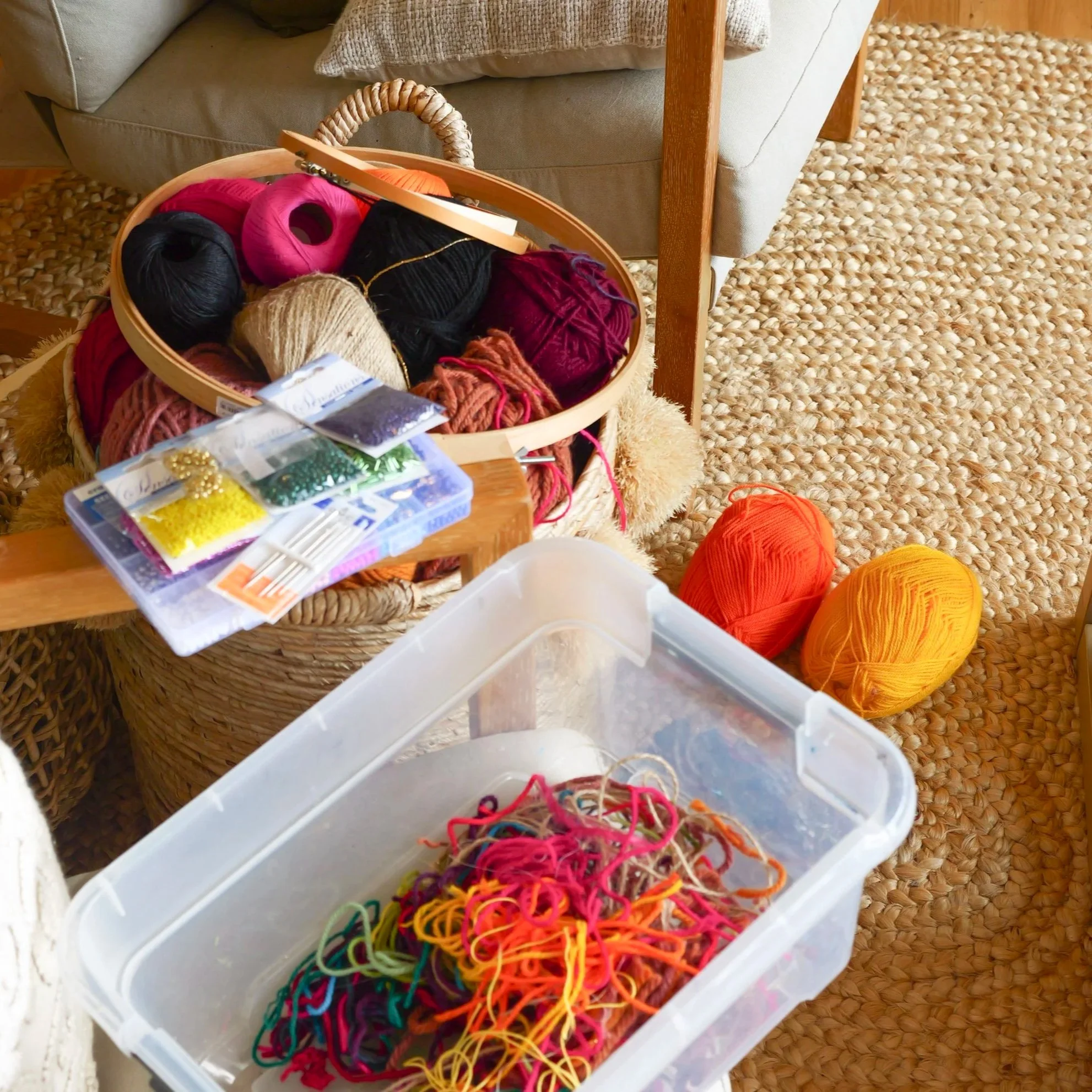
The pile of materials that sit by my side.
CHILDHOOD GAMES
When I was very little, my Dad and I had a marvellous game we’d play. He’d put a giant piece of paper out on the kitchen bench and one single pencil. We’d take turns drawing/creating a “place”. Once you’d added single element, you’d hand the pencil over to the other person and it would be their turn. They would get to work on adding their own unique element that in some way had relationship to what had already been built. This process could take hours and even days. They were often funny and if you could add a surprising piece of humor this made the game that much more fun.
My Dad being who he was, would always add vast landscapes with medieval armies and castles. For some reason or other that is always what eventuated. And it was always done in stick figures. By the time the drawing were finished they almost had a feeling of “The Triumph of Death” painting; any place you looked on the drawing there was something going on. I suppose the modern version of this is SIMS or Minecraft. You’re staying in the present moment to accumulate a world never quite knowing what the end point is.
And so I think my artistic process has almost turned into an homage of how I use to play with my Dad, continuous drawing / making.
I don’t know what something is yet, whilst I’m in the process of making and that’s not a problem.
I’m trying to resist premature judgement and trust that meaning, form, and clarity will arrive later often when I return with fresh eyes.
I might not have fully grasped why Reznor’s “shit pile” was as meaningful back in 1999, but needless to say I am grateful for the “shit” pile.
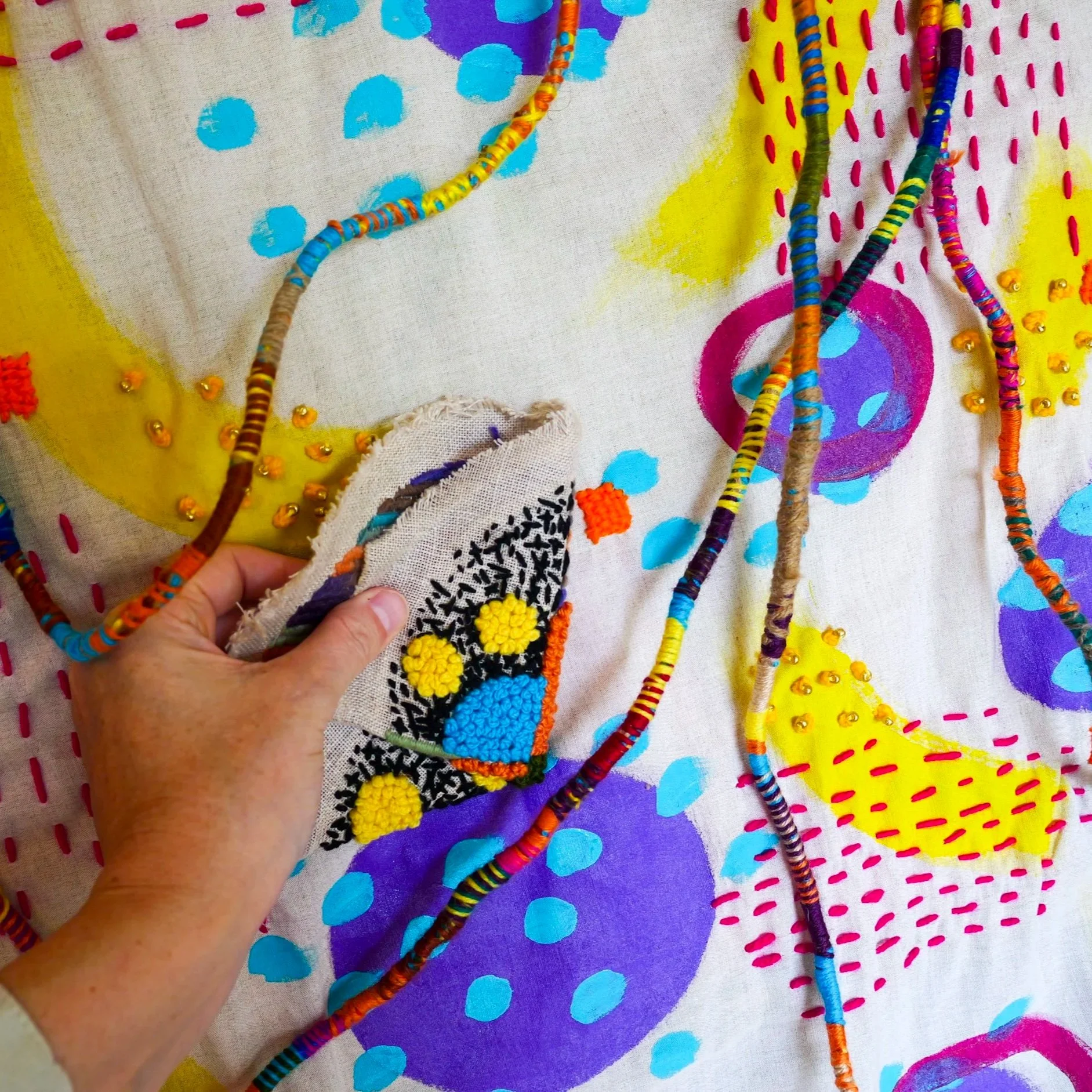
Maybe some black hand stitching built into it like this textile practice piece?
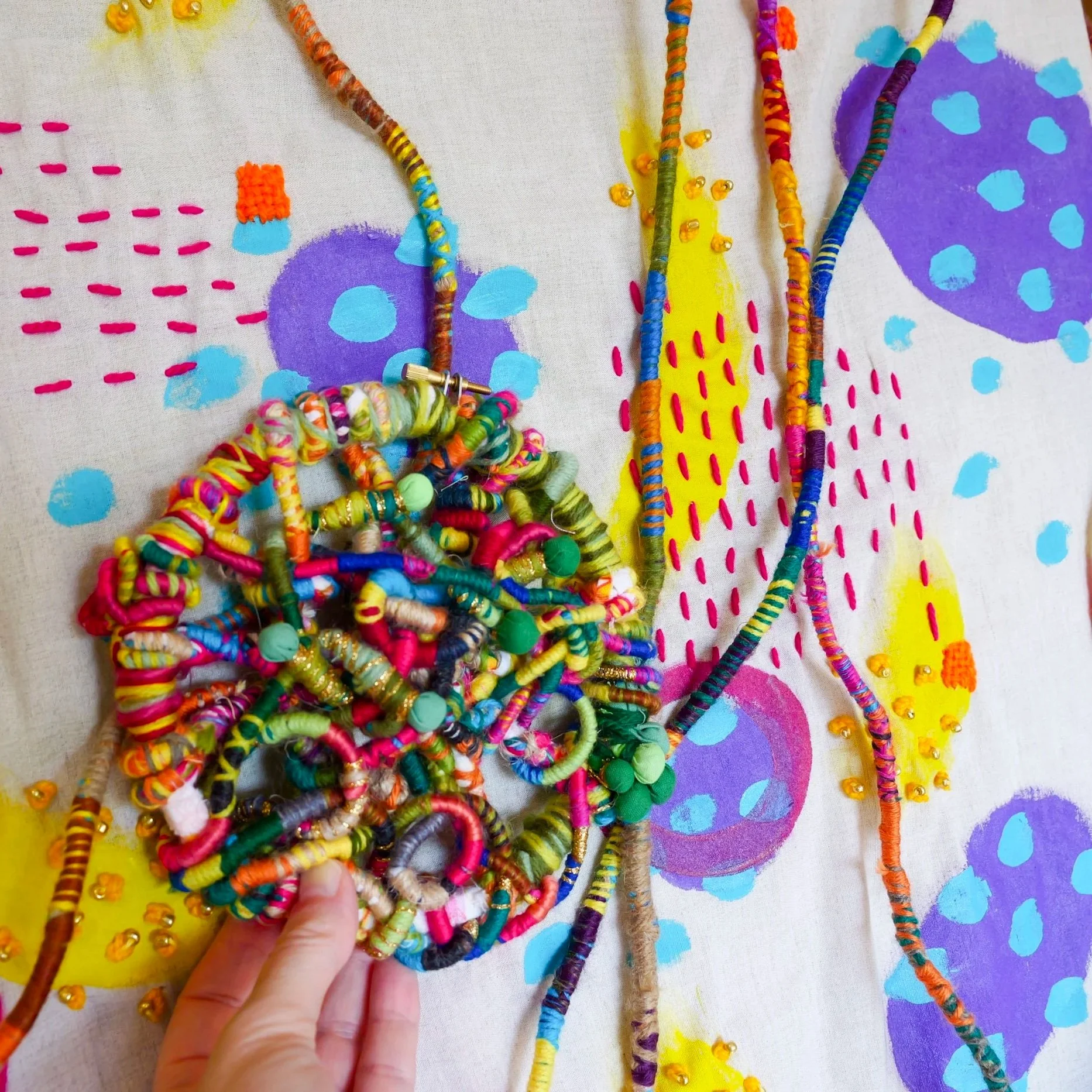
Perhaps applying some circular baubles to add depth and texture?
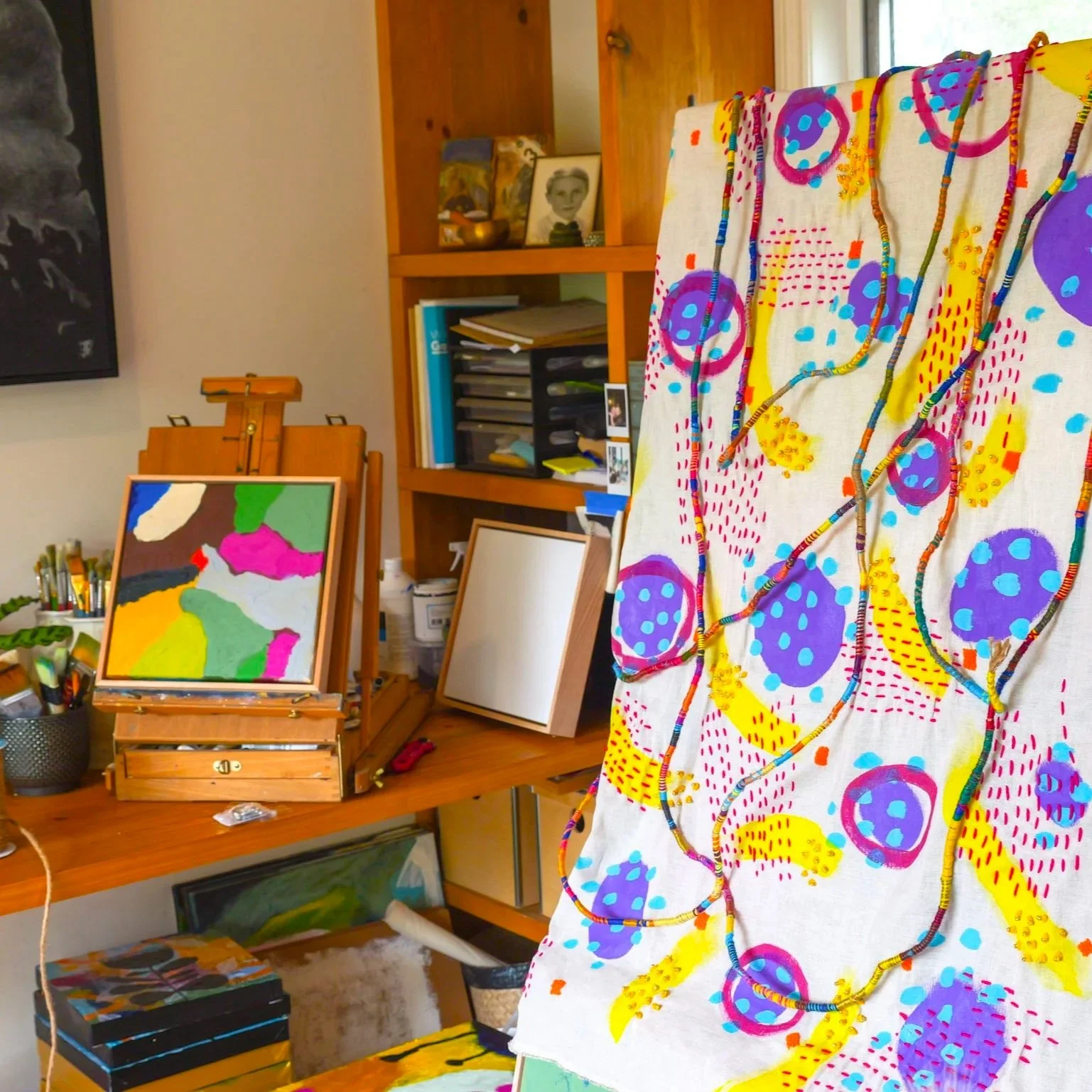
A picture of my late Dad as a child sits in my studio, always by my side.
